A Friend in the Business - Navigating the Complex Healthcare System
Podcast Episode 196
November 25, 2025
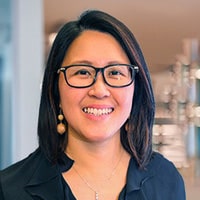
GUEST:
Dr. Stephanie Tan
Listen & Subscribe
If you enjoyed this podcast, please go ahead and hit subscribe on your favorite podcast platform.





Difficult Conversations is back with one of its most personal, emotional episodes yet. Dr. Anthony Orsini and Liz Poret-Christ return to talk with guest Dr. Stephanie Tan, a physician and clinical trial specialist whose career has spanned surgery, dermatology, pharma, academia, and regulation across Asia and Australia. Stephanie shares how her own health redirected her from surgery into research, giving her a rare 360-degree view of medicine and clinical trials. That perspective and her personal journey ultimately led her to co-found AbbeMed, a doctor-led concierge service that helps patients and families cut through red tape and connect with the right specialists, clinical trials, and cutting-edge therapies around the world.
The heart of the episode is Stephanie’s deeply moving story as both doctor and mother. She recounts the long, frustrating process of noticing her young daughter’s developmental delays, fighting through months-long waitlists, and finally receiving an ultra-rare genetic diagnosis, only to be met with silence from the pediatric neurologist who didn’t know what to say. Dr. Orsini and Liz unpack what compassionate communication could have looked like in that moment and why “I don’t know, but we’ll figure it out together” can be so powerful. From there, they explore how AbbeMed aims to be that “friend in the business” for families facing complex or rare conditions, and Dr. Tan offers advice to new doctors: stay curious, think beyond rigid training, be honest when you don’t know, and always validate your patients’ emotions. She closes with a message of hope for patients and caregivers: Keep an open mind, don’t give up, if there’s a will, there’s a way, and services like AbbeMed exist to walk that path with you acting like you have a friend in the business. Download this episode now to hear more!
Transcript:
Speaker 1 (0s): My own journey in life has taught me to keep an open mindset, to be receptive to new possibilities, to think outside the box. In medicine, particularly when you go through medical school, you are taught to do things a specific way and you have to do it this way and you expected to just keep doing it the same way. But I think the doctors who are willing to think outside the box, who are creative, who remembers why they’re doing what they’re doing, which is our patients are often the best doctors.
Speaker 0 (37s): Welcome to difficult Conversations. Lessons I learned as an ICU physician with Dr. Anthony Orsini. Dr. Ori is a practicing physician and president and CEO of the ORI Web. As a frequent keynote speaker and author, Dr. Ori has been training healthcare professionals and business leaders how to navigate through the most difficult dialogues. Each week you will hear inspiring interviews with experts in their field who tell their story and provide practical advice on how to effectively communicate.
Whether you are a doctor faced with giving a patient bad news, a business leader who wants to get the most out of his or her team members, or someone who just wants to learn to communicate better. This is the podcast for you.
Speaker 2 (1m 22s): Welcome to Difficult Conversations. Lessons I learned as an ICU physician with Dr. Anthony Orsini. Clearly this is not Dr. Anthony Orsini. This is Liz Pert Krist, managing director of The Orsini Way. And I will be co-hosting the show today with Dr. Orsini. If you’ve been following us for a while, it’s definitely been a minute. So welcome back. Tony and I weren’t entirely sure that we were gonna continue with the podcast, but 2025 has brought us some amazing new friends and we thought we would shake the dust off and start the show all over again.
So there’ll be some exciting new guests. You’ll meet soon and we just can’t wait to introduce you to our first one. So let’s get right to it. Today we’re honored to introduce you to our new friend, Dr. Stephanie Tan. Dr. Tan is a highly experienced healthcare professional and clinical trial specialist with a unique 360 degree perspective spanning academia, clinical industry, and regulatory agency settings. She holds a Bachelor of Medicine and a Bachelor of Surgery and a master of medicine from the University of Melbourne Australia.
She has recently completed a senior Executive Master of Business Administration from the Melbourne Business School and has participated in executive education programs at both Stanford University and Harvard Medical School. So basically you can call her a major overachiever. Stephanie’s work bridges the gap between clinical research and real world care because she believes that families shouldn’t have to navigate this complex medical system alone.
We’ll also talk about how Stephanie founded Abby Med, a doctor led concierge service connecting patients with leading researchers worldwide for clinical trials and cutting edge therapies when standard treatments fall short. I had the unique privilege of meeting Stephanie after I made a personal post on LinkedIn about my husband’s very complicated cancer journey. Stephanie was kind enough to reach out to me.
And from there I’m so grateful for the friendship that has formed and the conversations that we’ve had about how complex the healthcare system is and how sometimes compassionate communication from physicians just fall short. It’s amazing to me how something as simple as a LinkedIn post can draw people together and form friendships that I know for myself I will forever be grateful for. So we’re very, very grateful to have Dr.
Tan on the show and we can’t wait for you to meet her and hear all about the amazing work that she’s doing. So Stephanie, welcome to the show and as we always like to say, how does it feel to reach the pinnacle of your career to be on the Difficult Conversations podcast?
Speaker 1 (4m 28s): Thank you. Listen, thank you Cody, for this opportunity to share a little bit about my story and how I landed where I am. That’s a very good question ’cause I didn’t go through the conventional pathway. I think if you asked me 10 years ago that I would be doing what I’m doing, I’m gonna say You’re crazy. No way. ’cause becoming a surgeon was a calling to me and I always knew that since I was 10 years old and it was a relatively easy walk in the park, I did my studies, got into medical school at Melbourne Uni, did a year of physician training, applied into surgical training and got in the first time, did my exams past the first time.
So who would’ve thought? But life had its plans and unfortunately, you know, I developed a medical condition that had put me in a position where I had to choose surgery or something else. But pursuing surgery at the cost of my health was something that was advised against strongly by my mentors and my bosses. And so back in 2010, I left surgery and went into dermatology. And that was when I first came across clinical trials because as you know, how many surgeons actually know about clinical trials. And so in dermatology I was working as a research fellow at Melbourne’s only quaternary referral center.
And it was there that I saw firsthand what interventional or experimental medicine can do for patients with chronic disease, specifically in patients with moderate to severe psoriasis. This was during a time when a new wave of biological agents were entering phase three trials in patients that were covered in psoriasis, walking in with hate downward leave our clinic after two, three doses, hate held high, coming back to tell me how transformational my work was. But in truth, it wasn’t my work, I was just the conduit.
And that kind of changed my perception of pharma. I’m not sure about your part of the world, but in our part of the world, pharma is always viewed as the dark side. But it was then I realized that there is a way we can work together to leverage on each other’s strength. One thing led to another and I was headhunted for a regional leadership role with Quintiles, which was the world’s largest or contract research organization based in Singapore. I packed my backs, this was back in 2014 and joined Quintiles in Singapore.
Did that for two years, built a business unit, wrote a book on clinical trials. Trevor Asia witnessed high performing clinical trials. But after two years of relentless working round the clock, I asked myself what I was doing there because chasing the bottom line wasn’t really why I did medicine for. So I went on a medical mission trip in Africa, met my husband there and we found my purpose, came back and reconnected with my dean from my medical school who happened to be in Singapore at that time, leading the youngest medical school.
And he asked me to join him in building the clinical trials facility at the university. I said yes, as long as I report to you. And then after that, one thing led to another. Very quickly I took over the reins of an early phase clinical trials in Singapore. I also joined the National Committee on Clinical Trials Development. So I worked at two major universities and two major hospitals. Basically my role was very much harmonizing all clinical trials processes and upscaling clinical trials capabilities.
I did that for five years. By the third year, I had accomplished most of what I’ve promised my dean and my boss at the clinical trials unit. I got married, had my little girl, and that was when I decided to come back to Australia. And so I came back in 2021 and worked as a regulator and then spent two years there and then set up my own consultancy. Things was going as planned. And then I noticed my little girl was
Speaker 3 (8m 17s): Stephanie’s getting a little, hi, it’s Dr. I’m here too. Even though Liz introduced, she’s got a much better voice than I do, that’s why I let her do it. But just wanna let everybody know Stephanie, this is a difficult time for her. And she moved us the first time she told us the story. So take a breath and whenever you’re ready, go ahead and start.
Speaker 1 (8m 37s): When I agreed to my Australian dean that was gonna stay in Singapore and I told him that I would only stay if I report to him. And the second condition was if I had a child, I would come back to Australia. And so for some reason I always ended up in positions where I would report to three or four bosses at any one time. Maybe that’s why I went through surgery ’cause it prepared me for that. ’cause in surgery you report to 10 surgical bosses at any one time. And so when I got pregnant, my clinical trials unit was practically on autopilot because I had done what I need to turn it around, built a team.
And so I told my boss I want to come home. And he say, okay, that’s fine. And so COVID hit, we got stuck and then we left off grid for six months in Montana where my husband is from. And we came back in March. Off the grid? Yes, completely off the grid. No internet. Oh, luckily we do. ’cause we had a satellite, but we had to generate our own electricity. My husband had to haul water from the nearest town, which is 20 minutes. And I was breastfeeding at that time and this is coming from a girl who’s never even camped in her life before.
So yeah, me too. Yes, never. So it was quite an experience. And so after six months of that, we came back and I gave birth to my little girl in Singapore. Before I left, everything was going fine. She was behind in some of her milestones. She was sitting up at only eight and a half months. And recently I looked back at some old Facebook posts and realized my daughter didn’t even stand up till she was 17 months. So she was my first child.
And clearly I was a little bit more anxious than my husband. My husband has five adult children from his first marriage. And he will always tell me, Steph, you’re just overthinking. Every child is different. She’s fine. And so I kind of pushed my fears aside thinking that I’m just being paranoid and kind of just left things go until when she turned three, that’s when I said something is not right. Because she wasn’t running, she wasn’t jumping. When I’m alone with her, I don’t notice it. But when I see other kids who are her age or younger, that’s when my maternal instinct kicked in.
I’m like, this is not right. And I kept telling my husband, but it took my husband a while to come around and I still remember I was doing my MBA and we had two external modules. One was in Germany and this was going back two years ago and we were in Frankfurt Airport and there was a playground in the airport and my daughter went into play and as usual, she left the playground. You know, I was sitting by the playground waiting for her and she came up running to me and she said, mama, mama, help me, help me.
You know, in a nice way. And I saw how kids that were way younger than her, half her height, they were climbing up playground equipments. And my daughter couldn’t even pull herself up. And I told my husband, that’s really something not right. And he finally came around, he say, alright, when we get home we’ll see someone. And I was waiting for a year for him to say yes. And the minute he say yes, I was on the phone to my friends because in Australia to get into a pediatrician is a six to 12 months wait.
Half of the developmental pediatrician have closed their books. The other half has at least a six months wait. And you and I know, I mean six months, it’s a long time in a child’s world. And I was prepared to fly back to Singapore if I had to because that was where I had my medical network. But luckily a group friend came around and she said, there’s a development, a pediatrician who was just came out into private practice, give them a call. And I did. I can’t even remember how many pediatricians rooms I call.
And I did. We got in, he was very nice. Until today he’s been very, very supportive. Every time my daughter hits a roadblock, he would always ask Stephanie, how are you? Which I’m very, very grateful for. When we saw him, he thought that my daughter Abby’s delay was isolated for the sake of completeness. He said, why not? Let’s get a speech assessment as well because that takes another six months wait. And so I waitlisted her for a speech therapist. We were able to access physiotherapy straightaway and they worked with her.
After waiting for four months, we got a call from a speech therapist and we commenced assessment. I was driving to my therapist and I still remember this was just a few days before Christmas. I was driving in the car on the way and I got this call from a speech therapist and she told me, she said, Stephanie, I’ve done the assessment and I think your daughter has an upper motor neuron lesion. And I say, what do you mean?
She said, I think your daughter has an upper motor neuron lesion. And obviously as a mom who’s a doctor, your mind just go everywhere. Like you know, what do you mean? What are you trying to tell me? And she say, I’m gonna send this report to your pediatrician. And luckily on that day when I drove back, my daughter’s physiotherapist came to see us and I told her what the speech therapist told us and she said, okay Stephanie, why not let me do a full neurological examination on Abby?
And she did. I thought it would be fine. But 15 minutes later she came to me, she said, Stephanie, come take a look at this. And I said, what? She said, she’s got CLOs on her left hand and her left leg. I said, they weren’t there before one day. Did she say? No? And so that was when I was like, oh, this can’t be, because at the back of my mind I was always worried because my husband comes from Montana and four out of his five adult children all have some kind of major medical conditions.
And he has two grandkids with genetic disorders. And so naturally with my medical hat on, I’m like, you know, I think there is something not right here. And so I rang on my pediatrician and I told him what happened. This was over Christmas New Year period, which is the worst time ever to be told this because to get any kind of imaging or test done, it’s gonna take longer. But thankfully her pediatrician was able to secure her MRI under GA very quickly. So basically the day after New Year and I pushed for genetic screening.
He agreed after I taught him my reasons. And so we did all the tests a month later. And in that meantime I was trying to get her to see a pediatric neurologist again. That was another six months wait. And I was like, I can’t wait six months. Like you know, she’s got regression of a neurological status, I can’t wait. And so one option was to just fly to wherever it is, I can secure a pediatric neurologist. But before I did that, I called on a family friend who is a renowned neurologist in Asia who was formerly educated here.
And I called him, he was my mentor when I was in medical school. And I call him and I say, I need your help, it’s for my daughter. And he said, tell me what you need. And so he reached out to his mentor, a famous neurologist in Roy Melbourne Hospital here. And through his help we managed to get into a pediatric neurologist within a month, which is quite a miracle here.
Speaker 3 (16m 10s): It’s amazing to me about how hard it was to navigate that system. And we’ll talk about abed later, but I think the one thing I’m thinking of is how horrible for you to have to go through this, but what your tenacity, your knowledge and your connections you were able to get through that. All I keep thinking about during the story is what about all those people that don’t have, that don’t have the knowledge? And I wasn’t aware about the Australia healthcare system that it was that difficult to navigate.
It’s not perfect the United States either, but that’s difficult. So I’m sorry, please continue. So now we’re in the Christmas period.
Speaker 1 (16m 51s): So we secure an appointment with her pediatric neurologist. I still remember that was sometime in January after she had an mri. The good thing was the mri, it was normal. So the neurologist did an examination, confirmed the same thing, hypotonia, clus on the left side. And then we went on holidays.
Speaker 3 (17m 9s): Steph, can you tell everybody, ’cause not everybody’s medical here, what clus means,
Speaker 1 (17m 14s): You probably better it.
Speaker 3 (17m 16s): It’s a twitching or a stiffening of the clus was on a one arm or was it on
Speaker 1 (17m 21s): It on the left arm and off left ankle everywhere. Yeah.
Speaker 3 (17m 24s): Okay. So it’s like a twitching and a tightening of the muscle tone. Yes. Okay.
Speaker 1 (17m 28s): Yeah. So then we went home. We went to visit my parents in Malaysia to celebrate Chinese New Year and came back and it was March, 2023, we had an appointment with the neurologist. So my daughter and I and my husband walked in. I sat my daughter down at the play area. But as I walked in, I saw a stack of printed papers to the left of the doctor’s paper.
Something in me told me this is going to be bad. He asked us to sit down, which is always usually not a good sign because as the doctors, we know what that means. We sat down and then he didn’t go on to say, oh, the usual spill, we did the chromosomal microarray test on your daughter. And it showed that there is some abnormal findings. And so he told us what was wrong with it as he delivered the news to me, I can tell my husband was in a bit of a state of a shock, but for me, because I was a clinical trial specialist, I’m familiar with experimental drugs, I’m familiar with rare disease in my head, I was trying to formulate what are the questions I can ask him right now?
Where can I look for more information? How can I get more information? How can I get the support I need for my daughter? So when he finished and he told me, he said, this is what your daughter has. This is the case report and this is the only case report we have on your daughter’s condition. I immediately recognized this is an extremely rare condition. So I asked him two questions. I say, can I ask you two questions? And he say yes. I say First, what is the incidence of my daughter’s condition? He was silent.
And I say, okay, what does this mean to my daughter’s life? Prognosis. He was silent again at that time. I just want to run off that room. I want to run off that room. Not because I couldn’t, I just wanted to run out and start getting onto the internet, get on the phone with my friends, find out more about this condition, find out how I can help my only child. And so we kind of sat in there for a while, everyone in an awkward silence.
And then I kind of told my husband, yeah, let’s just go. And we left. And that was when I, you know, I started my own journey with my own daughter
Speaker 3 (19m 58s): Stephanie, do you think he was silent because he didn’t know the answers or he was silent? ’cause he just didn’t want to tell you?
Speaker 1 (20m 3s): I think he was silent because he didn’t know what to say to us.
Speaker 3 (20m 7s): You mean he didn’t know the answer to the questions or he just didn’t know how to say it? He
Speaker 1 (20m 10s): Didn’t know the answers to the question because he, because it was so rare. Yes. And he later on told us he couldn’t answer because there was only case reports on it. So there was not enough data for him to tell us what was going on. And my understanding was it’s the first time he’s come across a patient with that. And so I left the office and in the car I was emailing everybody, like literally everyone, my family, my friends, my colleagues, my acquaintance, everybody in medical research, everybody in pharma and asking, please if anybody knows anything about this condition, anything new, I wanna know.
And just six months before that, a good friend of mine who’s also happens to be the co-founder of Abby Met, he’s a neurosurgeon based in Seattle, his name is Dr. Tran. He had called me to share about this idea about Abby Met. And his story is his best friend who lives in Denmark, called him one day and told him that he was diagnosed with brain cancer and they weren’t gonna treat him in Denmark. And so my friend being a neurosurgeon started looking all over America and found two clinical trials that were suitable.
And he decided to fly over to Denmark and came back with his friend to University of North Carolina to enroll him into clinical trials. But unfortunately his brain tumor progressed too aggressively. And even though he made it to the hospital, he didn’t make it for the trial. And that was when he called me. And this was six months before Abby received her diagnosis. And he said, because he knows that, you know, I was in clinical trials and he says, Steph, do you know how hard it is to navigate clinical trials just in general finding the right clinical trials?
And I say, yeah, of course I do. In fact, this is what I do, right? And she say, there’s a lot of platforms out there, they’re not really helpful. And I say, yes, you are right because the platforms are not built for patients. And I noticed, because I’ve gone on it many, many times for my own health, just sometimes just randomly just checking out what platforms or what technologies out there. And he say, if I’m a neurosurgeon and I’m struggling to navigate this clinical trial landscape for my best friend, can you imagine everyone else?
And I say, yes, it’s really hard. And so that was when he asked me what did I think about building a service to help people? And I think at that time I didn’t think much. You know, I kind of entertained the idea and we kind of talked about it. But because we both caring responsibilities. So we kind of start, stop, start, stop. Until Abby got diagnosed, my daughter got diagnosed. And that was when I was like, I rang him up and I said, let’s do this because that’s all I need, know what to do.
I can choose to just sit there and cry or I can just channel all this grief and help my daughter. And I told my friend, we need to do this because this is the only way I know how to protect her. And I say, if we are struggling there, so are many more people. And he say, okay, let’s just do this. And so that was how Abby met was born. We then sat around and thought about the name. And initially we thought, should we really use her name?
Because he was concerned about privacy issues. And, but then at the same time I say, she’s really the reason why I’m doing this and we can help many, many more Abby’s out there. And he said, if you are fine with it, we’ll go with that name. And so that was how Abby met was really born. And I started sharing with my friends in Singapore. ’cause in Asia Singapore is the hub for medical tourism servicing wealthy patients from around the region. And so I started to share with my close friends who are in medicine and in private practice and what got out.
So we have a few customers. It’s a slow start.
Speaker 3 (24m 3s): So can you tell everybody what Abby Med actually does? ’cause it’s pretty amazing what you do and I’m hoping that there’s at least one person out there that’s gonna hear this. So tell us exactly what you do so that we can maybe help somebody out there.
Speaker 1 (24m 19s): Abby Med is a doctor led concierge and we focus on that is because both my co-founder and I are both doctors with extensive experience, not just in clinical but in academia and for myself in pharma. So we have extensive network globally. We understand how research works, we understand how clinical trials work, how to access experimental therapeutics, how to access cutting edge treatment. How it works is, a good example is patient or their family could come to us and tell us that either the patient or the families who approach us has a medical condition and they don’t know how to go about it.
The person I can think of is office customer is a very wealthy customer whose mother suffers from a very rare neurological condition. And they’ve been trying to approach a specific researcher in a very renowned neurological academic center in America. And they’ve been trying for six months and they just can’t get through. And they so happened to see my friend who’s a gastroenterologist in Singapore and asked him for help. And there was friend me and my friend who learn about abma and what I do, referred him to us and we sat with them, had a meeting, tried to understand what is it that they’re after, what condition that we are looking at.
And then my partner, Dr. Tran then set up and mobilized his network to reach out to this specific researcher. It took us one month to get a hold of this researcher. A lot of it was because I think the hospital was undergoing merger and acquisition and just emails weren’t getting through and phone calls just was getting to date ends. But we persisted and in the end we connected with the team, shared with them our client’s story, and they generously agreed to use their technology and experiment on this condition that we are now going to be testing on.
My client has subsequently pledged a significant amount to fund their research with a hope we would find a treatment that can alter the progress of this disease. So that’s one way. Another example would be recently, like a friend of mine rang me and basically told me that his friend’s 6-year-old child has developed acute visual problems. And actually the text that came through was step, how do I get into a pediatric neurologist? I mean the first thing I was like, oh my god, this is going to be hard.
And I picked up the call, spoke to him, I said, access to pediatric care in Australia, especially specialists is going to take six to 12 months. And that’s if they haven’t closed their books. And I say, tell me what’s going on. And he then sent me a copy of the referral letter from their family practitioner. I looked at it, I forward it to my co-founder who’s a neurosurgeon. He looked at it and he said, Stephanie, a child that young shouldn’t complain of any visual problems and if they do, it’s a red flag. So I looked at it and quickly I thought, how can I circumvent the system?
And so then I rank him and I say, bring him to an optometrist because if the optometrist finds something sinister on it, you can bring that report, go to emergency department, show it to them, and they will be forced to refer to ophthalmologists straight away. So that was what the patient did. And then on top of that, I mean obviously we spoke to the patient’s father and I explained to the father, what you need is not a neurologist. What you need is an ophthalmologist. So just things that comes naturally to us as doctors often doesn’t come naturally to non-doctors.
When they thought about visual problems, they thought we’ll need to see a neurologist. But can you imagine you wait six months to get to a neurologist, then the neurologist tells you I’m the wrong specialist. So wait another six months and 12 months for a child. It’s a long time. But in that case, having set up, Abby met one option, I could offer the child’s father, as I say, see how you go with getting an appointment if you can’t get an appointment because they are from Malaysia, from the country I’m raised in as well. I say, see how you go if you can’t and if you’re willing to travel, I can make the arrangements to get you into a specialist elsewhere just to get your child assessed.
And you’re like, okay. So I think that’s where Abby met comes in. What we are trying to solve is the access issue. And it can be access to the right specialist, access to a clinical trial which is not available where you live or access to treatment, which may not be standard of care where you live. For example, like my co-founder’s best friend, you would think the standard of care in America would be the same in Denmark, but it wasn’t. His friend couldn’t get the same standard of care in Denmark for his glioblastoma multiforme. So he had to travel back to the us.
So my co-founder and I, we both just feel that why does where you live determine what kind of treatment you can access? Because in today’s world with technology and with globalization, we should be able to access treatment anywhere in the world if we are financially able. And so that is where Abby met comes in.
Speaker 2 (29m 27s): That’s quite a story. Tony, what comes to mind is the phrasing that we use all the time that you wanna feel like you have a friend in the business. And Abby Med really is that friend in the business to help you navigate the things that you just don’t know that you don’t know.
Speaker 3 (29m 45s): Yeah, I just gave a keynote the other day and about the four insights of improving the patient experience and helping your patients. And the third one was be the friends in the business. And you had friends in the business that helped you, but most people don’t and they don’t have the means or the knowledge or the friends to help them through this. And it’s long wait in Australia, but really it’s everywhere. Our system is faster, but maybe not necessarily better.
So Abby Med is basically Liz, the friend in the business that if you think about it, right,
Speaker 1 (30m 23s): Exactly. That’s a perfect way to
Speaker 3 (30m 24s): Put it. You know, I mean that’s really what you are. Yeah, but you don’t have to be a friend. You could just call Abby Med. But stuff that’s a tough story. It’s the second time you told us that. And each time I could see the love in your eyes and I can’t imagine how difficult it must’ve been to hear those conversations and to hear everything. And then you’re navigating through your husband and you know, non-medical. And I think your tenacity shows boy and your daughter is certainly lucky to have such a tenacious mother.
Speaker 1 (30m 56s): I’m lucky to have.
Speaker 2 (30m 57s): But the difficult conversation here is that doctor in his silence of not knowing what to say, even though the condition was rare, even though there was no precedent, even though he didn’t have the history, he still could have said, whatever it is, we’re gonna figure it out together and I’m gonna find out what we need to do next. And I’ve got you and I’m not gonna leave you.
And whatever it is, we’re gonna do this together. It wouldn’t have been so hard to do that. But the silence, the silence is with stays. And in this show we talk about the difficult conversations and being a physician, I can’t imagine how terrifying that must have been. You didn’t have any answers but to sit and look at him and he didn’t have any answers, there was an opportunity there for him to leave you not necessarily with false hope, but to not be abandoned.
Yes.
Speaker 1 (32m 2s): I think you phrase it. Yeah. Yeah,
Speaker 3 (32m 5s): I think that’s a great point. And as doctors, Stephanie knows this, we hate to say we don’t know because we’re trained to know everything, which is impossible for us to know everything. And I think the take home message for that difficult conversation would’ve been, and you tell me Steph, if it would’ve helped if a doctor said exactly what Liz said, I don’t know, but I will help you find out and we’ll do this together.
Speaker 1 (32m 28s): Definitely the reason I worked to see him is ’cause I trusted his expertise. If I could have done this myself, then why would I go through all the trouble to get an appointment with you? And it’s because I recognize my limitations. So does my husband who’s a maxillofacial surgeon, we trusted him to do what is best for our daughter. And coming from the same field, my husband always jokes as doctors, you know, often we fake it till we make it. We’ve all been there and we understand if you don’t have the answers.
I mean it’s just like my husband’s ophthalmologist who stuffed up his cataract surgery and was trying to fumble his way out of the complications, which he could have just said, I’m sorry it didn’t go as planned. We understand because we are doctors, complications happen, but don’t try to cover up because we can tell. And that is what hurts most. As much as the neurologist, my daughter’s neurologist was well intended. I think it was the delivery, it wasn’t received that way.
He was a nice man. You know, I don’t resent him, but I just remember that moment. The good thing is I now use it to push myself to help other people. So whether it’s friends or family or clients or you call them patients when they come and see me, I think having that lived experience now makes me a lot better, doctor. And when, for example, when this child’s father read me, I spoke to him and I said, I understand where you’re coming from ’cause I’ve navigated this system. And I said, this is going to be a long and arduous system, but I can share with you how I get around it.
We can address this. I give them very concrete steps. This is what you do, this is how you circumvent the system. Because we have the insight knowledge. As I was thinking about this talk, I often wonder what would my medical colleagues say about me sharing the insights on how to navigate the system, right? It could be frowned upon, but at the end of the day there is a Chinese saying that goes, you don’t really know the true pain until you feel the needle prick on your own flesh, which is exactly this.
If I didn’t have lived experience on navigating the American, the Asian, and the Australian medical system for my husband who is elderly with multiple comorbidities and has comes with his own challenges and then having to navigate my daughter’s rare genetic condition, I probably wouldn’t have developed the same level of empathy and compassion that I have now because I’ve been through it, I’ve lived through it and I know how hard it is. But I also know how to make it better.
You know, when someone comes to me, I can tell them this way may not work, but there’s plan B and plan C, I can work with you, we can get there. And so I think that’s why my co-founder and I, we feel that Abby met, we can do a lot with Abby met in many ways, it always brings me back to my daughter. Like I always tell people this is my way to protect my daughter’s future because Abby Mac is the scaffolding that I’m building to link me to the latest technology, to the newest research that’s available.
I hope my daughter never needs to use it, but when the day comes where about whether it’s 10 years or 20 years and if she needs it, I’m ready.
Speaker 2 (35m 58s): Never underestimate the power of a mama bear. It’s amazing. It’s amazing.
Speaker 3 (36m 3s): Sounds like there needs to be a thousand Abby meds. One of the things you said that we teach, and we’re just wrapping up in a little bit, I know Liz has got one last question for you, at least one more. But we teach our young doctors when we teach them how to have these difficult conversations that sometimes kind of almost like a nervous thing that people say when somebody’s dying or crying or got bad news that doctors will very frequently say, I understand. And sometimes patients take real offense to that.
How could you possibly understand, you don’t have a daughter with a rare genetic disorder, but sometimes a doctor’s telling somebody that their mother died or something like that and they say, I understand my mother just passed away a month ago. Or it has to be very similar. But I love that saying it. Say it again about the prick. I love that
Speaker 1 (36m 58s): One does not understand the true pain of a needle until the needle point or prick touches your flesh.
Speaker 3 (37m 5s): Right? So don’t say you understand. We teach them to say I I can’t imagine what you’re going through or whatever. So I’m gonna use that. Can I steal that? Yes,
Speaker 1 (37m 12s): It’s
Speaker 3 (37m 14s): It’s not yours. It’s a Chinese proverb. Anyway, I’ll
Speaker 1 (37m 17s): Send it to you.
Speaker 3 (37m 18s): Alright, thank you. I’d love that.
Speaker 1 (37m 20s): Yeah,
Speaker 2 (37m 21s): I know I wish on my own journey with my husband’s glioblastoma that I wished I had Abby Med because it is a really complicated process and you just feel like you don’t know what you don’t know. And everyone’s afraid to tell you anything. So they tell you nothing and you’re left to navigate and scrounge and scratch and claw for every detail yourself. And as Tony mentioned earlier, and I think Stephanie, you said it yourself, I felt like with everything that I knew I couldn’t navigate it.
So how is the person with no medical knowledge, no prior experience, how are they supposed to navigate it? And that’s just not fair. It’s just not fair. So with that being said, what advice do you have for new doctors just coming outta medical school or just graduating their residency that listens to this show and feels like there’s an awful lot of complicated information that we’ve covered from the patient perspective, from clinical trial. What advice would you have for them on dealing with rare conditions, on dealing with complex medical conditions?
What advice would you have for them?
Speaker 1 (38m 30s): Keep an open mind. That’s my advice. If it wasn’t because of what happened to my health that forced me to give up surgery, I would never have learned about clinical trials and the entire industry that comes with it. I would still think pharma is the dark side, which is not entirely true. I think my own journey in life has taught me to keep an open mindset, to be receptive to new possibilities, to think outside the box. In medicine, particularly when you go through medical school, you are taught to do things a specific way.
You have to do it this way and you’re expected to just keep doing it the same way. I think the doctors who are willing to think outside the box, who are creative, who remembers why they’re doing what they’re doing, which is our patients are often the best doctors and at least the doctors. I wanna see when you spoke about doctors being afraid to break bad news or say they don’t know, the one thing I learned in my journey is patients know.
So sometimes just saying out loud, you’re not the first to say it, but you’re just acknowledging their emotions and you’re validating it and giving them space to accept and to process. And sometimes I find there are some patients or clients that we have that we can’t help, but at least we try better than some other doctors who just basically say, we can’t help you. That’s the door. And always saying is, as a doctor, I know how busy a doctor’s life is and how we’re trying to juggle multiple facets of our life.
Abma is here. If you have a patient that has a complex disease or a chronic or a terminally ill disease, whether it’s it because you don’t have the time or you don’t have the resources or you don’t have the knowledge cause we’re more than happy to step in to help your patient. That’s where we come in.
Speaker 3 (40m 33s): We’ll put it in the notes for this stuff, but how do people contact you? Is it abby me.com or how do you
Speaker 1 (40m 39s): Yes, we have a website abby me.com. And there is an email on it.
Speaker 3 (40m 43s): A-B-B-A-B-B. Spell
Speaker 1 (40m 45s): A-B-B-E-M-E d.com. Yeah. So A BBE is actually a combination of my husband and my daughter’s name, a, B for Abby, and BE is my husband Bert. And the reason I chose a BBE is because my daughter is pediatric, my husband is geriatric and so, so Abby met covers pediatric all the way to geriatric. And I have navigated the health system in America, in Asia and in Australia.
And I’ve got friends all over world. So I know what it’s like when even as doctors, when you’re in a new place with no friends, no network in your loved one’s, life is hanging. So my husband, when he was in Montana a few years ago, this was before my daughter was born, he developed a diabetic foot complication, was admitted to hospital, and he was Brady Cardiac, which is, he had a very low heart rate of 35, normal heart rate is 60 to a hundred, and they wanted to give him a beta blocker, which would drop his heart rate further.
Thankfully he was awake and he said, hang on, hang on, hang on. You just gave me my metoprolol. And they go like, no, we didn’t. And he goes like, no, you did go check it. And they did. But can you imagine like if they had, my husband would’ve flat line, and I still remember when I was at the hospital, I had done a vascular surgery. I know what a smelly foot smells like. I know my antibiotics very well, and I asked the attending, I say, what antibiotics are you giving my husband? I say, are you treating him with menting? And in front of me, he went on Google and started Googling.
Speaker 3 (42m 26s): Oh my God.
Speaker 1 (42m 29s): I was like, oh,
Speaker 3 (42m 30s): Oh boy.
Speaker 1 (42m 32s): This is in one head. By the way,
Speaker 3 (42m 34s): We’re so happy that you were able to share your story with us. I’m so sorry that we had to put you through telling the story again. But I think it’s so important for people to hear the story because they probably don’t know. We didn’t know until you contacted us that Abby Med existed. I don’t know any other place that does that. And for those people out there that hear this, and even if it’s just one person who needs, you, call Abby Med because you have a friend in the business. That’s a powerful statement.
It’s a statement about who you are, your resiliency and your ability to, instead of shrinking during a tragedy, to grow bigger. Liz is very much like that. She’s gonna blush, but she is able to, every time something terrible in her life happened, she just gives even more. So the both of you and to you, Stephanie, I think it’s an amazing thing. I think Liz and I, we are definitely really big fans of you and really are in awe of what you’ve been able to do with your life.
Speaker 1 (43m 39s): Absolutely.
Speaker 3 (43m 40s): Thank you so much, Steph, for being on this podcast. Anything you wanna say? I guess you already gave advice to doctors. How about the patients who feel like they have no hope? What do you wanna say? Call Abby Med and what else?
Speaker 1 (43m 52s): Don’t give up if there’s a will, there’s a way always.
Speaker 3 (43m 56s): Well, thank you Stephanie for being on this podcast. If you enjoyed this podcast, I think this is number 94. There’s 93 other ones that you can go listen to and please hit subscribe. This will be available on just about every podcast platform. Hopefully what many people will listen and you’ll be able to help many people. So Steph, thank you so much. We really appreciate it. Thank you,
Speaker 1 (44m 17s): Steph.
Speaker 0 (44m 18s): If you enjoyed this podcast, please hit the subscribe button and leave a comment and review. To contact Dr. Ori and his team or to suggest guests for future podcasts, visit us@theoriway.com. The comments and opinions of the interviewer and guests on this podcast are their own and do not necessarily reflect the opinions and beliefs of their present and past employers or institutions.