Weight of your Words
Podcast Episode 198
January 14, 2026
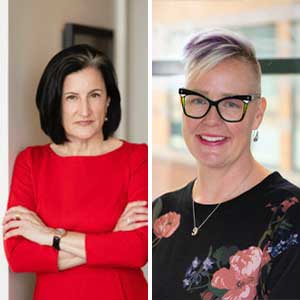
GUEST:
Tracey Piparo & Jennifer O’Brien
Listen & Subscribe
If you enjoyed this podcast, please go ahead and hit subscribe on your favorite podcast platform.





In this special episode of Difficult Conversations, Liz Poret-Christ hosts in memory of her husband Ken, whose voice you hear in the show’s intro/outro and who passed away about a year ago from glioblastoma. Liz shares how that loss and the painful reality that palliative care and hospice are often introduced far too late sparked the conversation. She welcomes two guests, Tracey Piparo, a longtime physician associate who transitioned from emergency medicine to palliative care because she realized patients and families weren’t being truly heard, and Jennifer O’Brien, a healthcare leader and author of The Hospice Doctor’s Widow, who became an advocate for “death literacy” after caregiving for her late husband through a 22 month cancer illness. Together, they lay the groundwork for why these services matter: palliative care can support quality of life alongside curative treatment, while hospice focuses on comfort and support at end of life.
The heart of the episode tackles why clinicians “dance around” these conversations: fear of failure, discomfort with mortality, a high-achiever culture that equates death with losing, and confusion about palliative versus hospice. Liz shares her personal story of repeatedly asking when to involve palliative care, only to be told “not yet,” until a hospice physician finally stated plainly that Ken was actively dying, leaving little time to prepare family and say goodbye. Tracey explains how avoiding clarity can rob patients of informed choices and argues communication should be treated like a clinical procedure, trained, practiced, and supported by specialists when needed. Jennifer adds a compassionate framework her late husband used “precious time” to help families understand when it’s time for the most important conversations (“I love you,” “I’m sorry,” “I forgive you,” “thank you”), and emphasizes that preparing for end of life doesn’t destroy hope, it reshapes it. The episode closes with a strong call for both clinicians and families be clear, ask early, bring in palliative support sooner, and replace “but and or” with “and” so care can hold “hope” and preparation at the same time.
Transcript:
DIFFICULT CONVERSATIONS: LESSONS I LEARNED AS AN ICU PHYSICIAN
The Weight of Your Words – Podcast Transcript
—
00:00:01 – Jennifer O’Brien
Death is greater than the best doctor. Death is greater than the absolute best cancer center. Wherever you believe that is, death is greater than a healthy lifestyle. As Tracy alluded to earlier, death is successful 100% of the time. Mortality rate is 100%. Only love—only love is greater than death. And these conversations and this preparation, this is health care’s love. This is our demonstration. This is our care and our love that we offer. And love is indeed greater than death. I can tell you I have outlived everyone in my immediate family and I still love them. I still love them dearly.
00:00:53 – Announcer
Welcome to Difficult Conversations: Lessons I Learned as an ICU Physician with Doctor Anthony Orsini. Dr. Orsini is a practicing physician and president and CEO of The Orsini Way. As a frequent keynote speaker and author, Doctor Orsini has been training healthcare professionals and business leaders how to navigate through the most difficult dialogs. Each week you will hear inspiring interviews with experts in their field who tell their story and provide practical advice on how to effectively communicate. Whether you are a doctor faced with giving a patient bad news, a business leader who wants to get the most out of his or her team members, or someone who just wants to learn to communicate better. This is the podcast for you.
00:01:18 – Liz Poret-Christ
Welcome to this episode of Difficult Conversations: Lessons I Learned as an ICU Physician. This is Liz Poret-Christ. I am the co-host of Difficult Conversations and the managing director of the Orsini Way, and I’m very honored to host this special episode.
If you’ve ever wondered whose voice is on the introduction and closing of our show, that would be my amazing husband, Ken. And if you’re listening to this episode on or around January 14th of 2026, it will have been about a year since Ken passed away from a glioblastoma, a brain cancer that is terminal. Almost immediately upon diagnosis, people often ask me if training doctors and discussing the difficult conversations in health care made dealing with Ken’s illness easier or harder.
That question is full of heartbreak for me, but it actually inspired this episode. One of the most difficult conversations surrounding a terminal diagnosis is the topic of palliative care and hospice care. Although often confused, they are not the same thing. Palliative care is an extra layer of care that helps improve the quality of life for someone with a serious illness.
That illness may be chronic or terminal, but it can also be used when curative treatment is still being given. Hospice care is focused on the quality of life at the end of someone’s life, but in either case, health care providers are often reluctant to recommend these services to their patients, and if they do, it is often very late in an already difficult process.
This was my family’s experience, and I thought I would call in some friends to help me discuss why this is and how we can make it better for families in the future. We have two special guests today, and I’d like to give you a brief introduction before I let them come on and speak for themselves. Tracy Piparo is a seasoned physician associate with over 20 years of health care experience.
Tracy is dedicated to enhancing the lives of individuals facing serious illness. Her expertise in palliative care focuses on empowering patients to actively participate in their health care decisions, including advance care planning. Jennifer O’Brien, in her nearly 40 years in health care, has been a practice management consultant to physicians, served as CEO for two large medical practices, and held administrative leadership positions in three academic medical centers.
The art journal she created as a form of self-care during her late husband’s 22 month illness, was published as The Hospice Doctor’s Widow and won four awards, including a Nautilus Award. And if you haven’t seen it, I highly suggest you look at it. It is beautiful and heartbreaking and really a look into a heartbroken soul. I felt like it was looking straight into my heart.
My husband, Ken used to joke that Tony and I were changing the world, and I think if one provider listens to Tracy, Jen and I on this show today and is willing to have the difficult conversations with their patients and their families about the services available in either palliative care or hospice care, then maybe sharing my family’s story of the unnecessary pain that resulted from not having these conversations will have been worth it.
I promised Ken I wouldn’t stop trying to save the world. So for Ken and for Jennifer’s husband Bob. This episode is dedicated to both with love. So, Jen Tracy, thank you so much for joining us. We’re so excited to have you on the show and talk about this really important topic. And we love to start our show off by asking you both to tell us a little bit about yourselves. So, Tracy, why don’t you start off first?
00:05:38 – Tracey Piparo
Hi. Thank you so much for having me. This is very exciting. So I’m a PA, physician associate for wow, almost 25 years now. I have mainly practiced in New Jersey, and I started out doing emergency medicine for a real long time. I was an adrenaline junkie. It was awesome. People came in, I fix them, I had instant gratification and it was fantastic.
Then I moved on as life happened and I had two little kids to take care of. I moved on to a hospitalist position for some better hours, and I recognized that lots of the people I took care of in the emergency room now I had to take care of them on the floors in the hospital. And I’m like, wait, we probably should have thought about lots of the things that we did before we did them.
And I started having conversations with people, with patients and families and recognizing that sometimes we don’t listen to them. We just do, and we don’t listen and we don’t ask, and people don’t offer information because we’re not allowing them the opportunity for it. And I was trying to figure out what kind of aspect of medicine is this, what am I actually doing and how do I do this more?
And I will admit, I did not know much about palliative medicine. We had a very small team at my hospital at the time, and I started consulting them and they would come and see them, and I’m like, I’m just going to sit here because I want to hear what you say to these people. And in my head I’m like, this is my jam.
I want to do this. This is great. How do I do more of this? And I basically kind of followed around and got in touch with people and kind of maybe tortured folks until there was a job available for me to do it, and in the meantime found a lot of learning opportunities on my own to become a better communicator for me.
What I have come to tell folks is my skill that I’m developing as a provider, a clinician, is communication. When I was in the E.R., I had to get good at intubating or doing an LP or something like that. My skill is communication. There’s no perfection, but you can’t get better at it without practicing. So I feel like the sunset or whatever of my career now.
But also it’s by far the most humbling aspect of medicine that I have ever practiced, because it’s not about anybody else, but the patient and the people who love them. But it is the most rewarding in a vastly different way. I couldn’t agree with you more. Yeah, and I can’t imagine doing anything else now. I can’t imagine going back to real medicine, like people like it’s not real medicine.
I’m like, it is. But I also can’t imagine going back to anything else at this point. That’s amazing. We just recorded another podcast, and the doctor that we were talking to is saying how the best thing she’s ever heard is when someone, even in the most tragic outcome, thanks her for being the doctor that was in the room with her and that, to me, has to be the thing that is the most rewarding.
00:09:00 – Liz Poret-Christ
I am not a medical provider, but to me, I don’t think there’s anything that could be anything better to have a tragic outcome and to be thanked for by the patient to be the one that was in the room with them.
00:09:23 – Tracey Piparo
Yeah. You just bringing that up the other day, I’m a good one for getting like random texts and trying to figure out who’s sending them to me because I don’t save everybody’s number, especially on my work phone.
And I got a text and thankfully they told me who they were and it was a patient’s wife. And just like you said, for her to take the time to reach out to me when she’s going through the most terrible thing that has ever happened to her, her text to me was, I just want to let you know that I recognize that you worked really hard to get him home, and we had a great three days.
And I want to say thank you for that. And again, that’s the humbling part. I get more from that than someone when I was in the emergency room saying like, hey, thanks for making my like stubbed toe or my tooth ache feel better. Not that that wasn’t important to them at the time, but it’s not so much thanking me for the work I did.
It’s the fact that you took the time out of the most terrible thing to be like, wow, let me tell this person what happened. Because sometimes that’s the hardest for the clinicians is that sometimes I send people off to the decisions they made, and we try and set things up and you know what’s going to happen, but you’re not really sure how it happened.
00:10:52 – Liz Poret-Christ
I mean, if you ask me. Anyway, we’ve trained thousands of doctors, and a lot of times if we’re in a room or even when it’s one on one training, I’ll say to them, you have the opportunity every time to be the hero or the villain every time. And it’s how you show up and how you leave that you have that opportunity.
And when you walk in, what’s your mindset? Do you want to leave the hero or do you want to leave the villain? And they don’t think about it, but the patient thinks about it and the patient’s family. And this is statistically proven. The patient’s family thinks about that for up to 30 years. That moment, that bad news, that tragic outcome stays with those families for 30 years.
How do you want to be remembered? It’s a heavy lift. So with that heavy lift, we’re going to ask Jen to introduce herself and then we’ll get started on our show.
00:11:46 – Jennifer O’Brien
Well, thanks. And Tracy, I have to say, you are not in the sunset, my dear, at 25 years, because I have been in health care for 40 years and so I am at the sunset.
You are not yet. My name is Jennifer O’Brien, and for about 40 years I’ve been on the administrative leadership side of health care, not clinical in any way. I did a lot of interim CEO-ing for large physician practices in the latter half of my career, and it was then that I took the interim CEO position for a very large orthopedic surgery practice in Little Rock, Arkansas, which is not where I was from.
I’ve lived a lot of places, but I had not been to Little Rock, and while I was there, I met and fell madly in love with this guy, Bob Lundberg, who also similar to your story, Tracy had been a plastic and reconstructive surgeon for 33 years when neck injury made it impossible for him to operate without excruciating pain.
So instead of retiring, he chose to retrain in hospice and palliative medicine. And so I met him after he was already doing that. I had already lost my only sibling, David, three weeks in a coma following a motor vehicle accident, and then my mother to pancreatic cancer. And so I knew how important the work Bob was doing was.
Besides, he was super cute and funny and smart and all that good stuff. So we fell in love and we got married and we had this wonderful life. And he would have said the same exact thing that you did, Tracy, about as much as he loved surgery, he used to say as a palliative care and hospice physician, I feel like I’m the doctor I was always meant to be.
He absolutely loved it and saw the tremendous value in the communication, which is at the core of that specialty. So very similar adrenaline to a different kind of adrenaline. Anyway, we got married and we had this wonderful life. He was on faculty at UAMS, which is the University of Arkansas for Medical Sciences in Little Rock, and just had this lovely, quiet life.
I finished up the orthopaedic job, went back to some speaking and consulting that I had been doing on practice management when Bob found two lumps on the left side of his neck and they turned out to be metastatic sites from a renal cell carcinoma, and it was already in his thoracic spine. It was pretty advanced. He lived for 22 months following the diagnosis, and I am a self-taught artist.
So as his only caregiver, neither of us had kids. I turned to art journaling as a form of self-care, and I art journaled my way through his illness, his death, and some of my grief and a couple of years after he died, I was doing another interim CEO position, this time for a large multi-specialty medical practice, and a neurologist I worked with was telling me about how he was diagnosing three different patients with ALS.
So I brought my art journal into him. He took it home. He came back the next day, said, yeah Jen you’re not getting your journal back. I will be loaning it to these patients, and you need to figure out how to get that thing published, because it would help a lot of people. And so that came at a time in my grief when I was ready to make meaning and to help others, which was perfect.
And so I became determined to get this odd little art journal published as a book and found a publisher. And it was released as The Hospice Doctor’s Widow in 2020. And so since then, I have been working in this space where I advocate for family caregivers and for what I call death literacy in the movement is known as death positive.
I can’t really accept the term positive. I have lost every member of my family and there’s nothing very positive about it. However, the literacy part is so important. This is the biggest thing that happens in everyone’s life, right? Is their death and the loss of a loved one. It simply is. It’s just the biggest thing that happens. And yet we’re not even cramming for it, right?
We’re not learning anything about it ahead of time. We’re not preparing for it. It’s the biggest and the most consequential thing that we do, and we all need to get better at understanding it. And so that’s why I’m sort of driven to do this work.
00:16:58 – Liz Poret-Christ
Thank you, Jen. And you call your journal odd. I call it magnificent. If you have not heard or seen The Hospice Doctor’s Widow, I strongly suggest you get your hands on it.
It is a beautiful look into a grieving soul. I called Jen and said, I feel like you’re looking into my heart. It’s beautiful. It really is. I feel very blessed you have sent it to me and I love it. And I took snapshots of it and sent it to a friend and said, look at this beautiful book. So I’m really happy that you both are here.
And I guess my first question and how we should start. And it’s a heavy question—why do providers dance around this conversation? Obviously, it’s difficult. Obviously, nobody wants to tell their patients or their loved ones that they’re dying. I get it, I get it. But if you just think a second longer about what the ramifications of not telling them are, you would want to be more present in that moment.
So maybe Tracy, this question’s more for you. Why the hesitation?
00:18:28 – Tracey Piparo
I have one thought. I bet I know Jen and I have even talked about this. I’m sure she can add a lot to. First off, I think that anybody that goes into medicine. Let’s talk about the generic answer. I like to help people. You go into medicine because you’re smart and you’re going to help people, and you want to see people get better.
No one ever asks what better means, because better is different for everybody. And a lot of people who practice medicine listen; it is a profession that attracts high achievers. We want to be right. We want to do the best. We want to be perfect. So what is the perfect outcome? Making your patient better, succeeding well, you know, beating whatever is causing the problem, whatever the serious illness is, we want to beat it.
We have this battle mentality, which I absolutely hate. So that’s number one because it’s the sense of failure when you don’t come out what you perceive to be successful. On the other side. But as Jen has taught me so nicely, that is 100% successful. So why are we seeing it as a failure? What I see as failure is not allowing people the opportunity to prepare for it.
When that opportunity is there, there are some people who will not get that opportunity. We can prepare by trying to advance plan, but I can’t prepare. If I walk outside and get hit by a car and I die, I’ve prepared because I’ve told my family, hey, these are things that are important to me. So if you do have to make decisions, you know, but I can’t prepare for that as much as if I had a serious illness and could foresee what could likely happen.
So that’s one. The other one is, as a provider, it’s a lot of our own pent-up fears that we just can’t get past. Right. If you’re afraid of confronting your own mortality, how are you going to adequately talk about that to somebody else in a supportive environment? Right. I’ve been in meetings where I am attempting to have a conversation about goals of care with, you know, let’s say an oncologist involved.
And I’m a big sit down and talk to a patient. I don’t know how many times I have literally pushed a grown man into a chair because they refuse to sit down. And I’ve come to realize a lot of it is that sense that they’re giving up power because they’re not able to stand up and assert their power.
You make them sit down, you take a little bit of power away, and they can’t be as fidgety, and they can’t touch the wall and lean on the wall. And so then what happens? They turn bright red and they’re embarrassed. Then I’m like, this is obviously hard for them. I 100% appreciate that. And that’s why, as a palliative provider, I tell folks a lot of times there is a place for primary palliative care.
Every doctor, no matter what you are practicing, even if you’re doing dermatology, you are going to see a patient who has a serious illness. So there is always an opportunity to remind people that they should be considering their goals of care. However, I also have to recognize that everyone can’t do that. If I go back to thinking about being in the E.R.
Yeah, I became proficient at certain procedures like intubating people now nine, ten years out of the E.R. could I probably do it? Sure. If I was emergency and I was the only one available, do you really want me doing it? If you have a choice, probably not. So if you can’t use those primary palliative skills, what I at least want you to be able to do is recognize that these conversations have to happen and know where to find the people who can facilitate that which is your friendly palliative care provider.
But I think what stands in the way is that sense of its fear and loss, loss of perfection, loss. So you had a goal of curing this person, and it’s your own failure that you are facing, and you’re not able to think about the patient at that point. And a lot of it, I think, goes back to when you’re treating someone with serious illness as a means of self-protection.
You’re detaching yourself from that as a clinician, you know, wow, this is really bad. This heart failure is probably eventually going to lead to this person’s end of life. But right now, I just diagnosed them with it and they’re doing great. And I have lots of medicines that I could use to make them feel better for maybe a couple of years.
But in your heart, you know that eventually we’re not cure and heart failure. They’re going to die from it. But if you don’t share that with them, how were they supposed to know that? Because they didn’t go to med school. So lots of people don’t understand that. But you’re not sharing it because it’s really hard. And then it makes you face the fact that your patient one day is not going to be there, and you don’t want them to lose hope.
I have a lot of feelings around the word hope, so I think it’s multifaceted as to why clinicians struggle, but a lot of it comes back to you. Your bread and butter is it comes back to the ability to communicate and recognizing it as a procedure, because the first time you do it, it’s going to suck. The second time you do it, it’s going to suck the hundredth time you do it.
It still sucks, but maybe it’s a little bit easier if it ever becomes easier, then you need to check yourself and do something else, because it should never be easy to have these conversations. It should just become a little bit less distressing.
00:24:13 – Liz Poret-Christ
Tony always says, we don’t send you in to do a lumbar puncture without training. We should never send you in to tell somebody that they’re dying without training. It’s not a soft skill; it’s a core competency. It deserves the training, just like everything else. And if no one teaches you how to do it, how would you know how to do it?
00:24:37 – Tracey Piparo
I think I would ask you guys, as a perspective on the other side of in your experiences that you have had, what do you see as the barrier? Is it the uncomfortableness, like are these things that you recognize? I can recognize a doc who is fidgety and can’t get the words out and is looking at me to kind of pick up on the sentence because they can’t simply say, I’m really sorry. We’re heading towards the end of life. Is that felt? Is that things that you guys have felt also, or is it different?
00:25:29 – Jennifer O’Brien
Well, I think Liz is better at responding to this because Bob was a hospice and palliative care physician. We knew from the moment of diagnosis where we were headed. I will say the oncologist was very anti—anti as far as he was concerned, palliative care and hospice meant he was losing and he would have given Bob chemotherapy on the day he died.
If he could have. And just dovetailing off of something you said since I brought up Bob’s oncologist, I think in oncology especially, but perhaps in other specialties as well. The biggest reason, I think your point about if you can’t have this conversation, then refer it to someone who can, and where that gets tripped up, especially in oncology, is oncologists and other specialties.
Not knowing the difference between palliative care and hospice, which they are distinctly, distinctly different, or thinking that they are doing it. Now, I already got this covered. I got the painting covered. That’s it. I’m good. And with palliative care available at the same time as curative treatment and a team of five interdisciplinary team of five, why wouldn’t you want an extra five people on your team on your side to make this go better?
Anyway, I don’t want to take away from Liz because I think Liz has the better. I will say we ran into a big problem that when Bob had to make the decision to admit himself to hospice, saying you’re ready for palliative care is easy, right? Diagnosis of a serious life limiting condition. Palliative care is appropriate because it can be provided at the same time as curative or life extending treatment.
The point of making the decision to do hospice is very difficult. I don’t care who you are, because Bob himself had a very difficult time making that decision. That one is hard, that one is really hard. And that’s where we ran into a lot of the oncologists didn’t like hospice was failure as far as he was concerned. And so it left it up to us to try to figure out when that was right.
And I think if Bob were here, he would say we did it too late. We waited too long. I know, I feel that way. Anyway. Go ahead, Liz, because you had a truer patient experience.
00:27:52 – Liz Poret-Christ
I think. So Ken’s diagnosis of glioblastoma—it’s terminal from the start. The minute the words leave anybody’s lips that you have a glioblastoma, it’s terminal.
And Ken was very aware of that. So was I, and he was diagnosed in June, and I think I was out for a walk in August. And I was on the phone with the social worker and I said, when do we call palliative? And she said, not yet. I said, but how will we know when? And she said, you’ll know when.
Don’t worry, don’t worry. We’ll walk you through that. And then I think in September I was on the phone with her again and I said, when will we know when to call palliative? She said, don’t worry, we’ll take care of that. So when he had his second craniotomy in December, actually the anniversary of that was yesterday, he had a stroke during surgery, and he decompensated, wound up in the hospital.
Nobody understood why he was failing. He was very ill. He was very, very sick and nobody understood why. And two weeks into this hospitalization, he’s decompensated. I’m asking the questions now. The big joke amongst all my friends and family. I am the medical phone-a-friend. I’m not a doctor, but I play one on TV. This is the big joke.
I love everything medical. Love it long before I even worked for The Orsini Way, so I understand what’s happening. I’m asking. He looks like he’s losing muscle mass. No. He’s okay. That bruise looks like mottling. Is he dying? No, no, there’s no. His oncologist comes in, and I teach goals of care conversations all the time. I’ve taught hundreds.
If not thousands of them. And the oncologist is talking to me and going over his recent scan because they don’t understand why he’s not getting any better and he’s actually getting worse and nobody knows why. And the doctor says in the casual conversation, it looks like he’s had a second catastrophic stroke at some point in his hospitalization. And at some point we need to have a goals of care conversation.
Those were his exact words. Okay. Well, at some point of course, we’re going to need to have a goals of care conversation. He has a terminal diagnosis. I don’t think a thing of it. Later that night, he has not eaten in days. Lots of things have not happened in days and he’s not spoken nothing and I just completely lose it.
I have a full out mental breakdown, and I had a wonderful relationship with the nurses on the floor, and I lose it. And one of the techs on the floor sees me crying in the ice room. I am hysterical and she runs and gets the charge nurse and says the wife in 204 is hysterical in the ice room, and the nurse comes up behind me, and she says, Liz, no one has seen you cry in two weeks.
What can we do for you? What do you need? I said, I think I need a hospice doctor. She goes, what? How do you not have one? He has a terminal diagnosis. I said, I’ve asked four times and everyone keeps saying, not yet. She goes, give me 15 minutes. And in 15 minutes the hospice doctor walks in. And to be honest, she didn’t sit down.
She didn’t do anything we would suggest at The Orsini Way. We would have loved for her to do. But she said, Liz, I’m so sorry to tell you this, but Ken is actively dying and he’s been actively dying for at least 24 hours.
And in that moment that she said it; I was so grateful that someone finally told me the truth. But then I got angry, and I was so angry that nobody had told me sooner. And he died four days later, which is nothing. Which is no time to prepare my children to get his parents here from out of town, to prepare myself for this 40-year love affair.
My best friend. I knew how this was ending. I’m not stupid. I understood what was going on, but I didn’t know in that minute and I should have. But the worst part of the story is a month later, after he had died, I literally woke up in the middle of the night and I sat straight up in my bed and I said, oh my God.
When the oncologist said, at some point we need to have a goals of care conversation, that’s what he meant. And that’s what made me enraged, absolutely enraged that an oncologist that specializes in a terminal illness, like a glioblastoma was uncomfortable telling me that my husband was dying when that’s his job. So fast forward and I won’t take up all the time.
I had a conversation. I had the opportunity to have a conversation with someone in the practice about their patient experience, because they asked me and I said they really could have done a better job with that. That was a big mistake. And for patients in the future, you can’t undo what happened to me. But patients in the future, that needs to be more clear.
And the response was that was a one off that just happened to you. And I said, out of your mind, do you think he was only uncomfortable telling me that my husband was dying? That doctor is uncomfortable telling patients, loved ones that their patients are dying. That’s the most ridiculous thing I’ve ever heard. So, this is not about me.
This is how to help families in the future have a better experience. So that’s what this is all about, right? How do we help providers get comfortable with these uncomfortable conversations? And it doesn’t have to be this big dramatic thing. But instead of saying, at some point we need to have a goals of care conversation, it could have been—and Jen, we can talk about precious time now because I think it’s a great segue.
Liz, this is the way it could have gone. Liz, I think that you’re in precious time and I don’t think Ken has much longer. I don’t know if it’s days or hours. I don’t know what that looks like. I don’t think that Ken is going to recover from this current illness from this current moment. I don’t think he’s going to be able to come home, whatever that looks like.
It was not clear to me. And there’s ways to know if a patient understands what you’re saying. I didn’t cry, I didn’t ask any questions. I clearly did not understand what he was saying to me, and he didn’t verify if I did or I didn’t. That’s where the room for improvement is. This is not about Jen. Your experience specifically or my experience specifically is about what do we help providers understand going forward that can make those experiences better for the next person up?
00:35:18 – Tracey Piparo
One of my like sounding cries is that I think the way that the shift is going to happen to where it gets better and there may be, you know, like housing, more education or providers looking to educate themselves is it’s going to come from the patients and the loved ones. They’re going to hear more stories like this that say, you messed up and there’s room for improvement.
And we expect that improvement. I tell people all the time, I have people call me all the time different parties or friends or friends from around the country and tell me, oh, I’m going through this with my family member and like, I don’t know, what should I do? And I’m like, well, do your quality of care supporting you.
And they’re like, what are you talking about? Nobody offered that. I’m like, ask for it. And when they say no, that’s what I was going to say. And when they tell you no, you demand that a palliative care provider comes in to you. I was like, do not take no for an answer. And I think that’s how it’s going to happen.
That’s how the shift is going to happen, because then providers are going to be like, well, everybody keeps asking for this, so I might as well just start getting them involved. I hate to put that responsibility on patients and loved ones, but I’ve been a patient. I’ve been a loved one. I just had my father-in-law home on hospice within the past six weeks, and he passed away, and it was the same experience.
I had to step back and I actually said to the team caring for him, I need you to do this because I can’t be the one to tell my husband and his siblings, but we’re having these conversations and you know what’s happening, but you haven’t said it out loud to them yet. I need you to tell them it’s okay.
I sat there and kind of walk them through it. I’m like, but it has to come out of your mouth. But I’m so afraid that if I wasn’t there and push them to do that, it wouldn’t have happened. So I do think it’s things like what Jen is doing by sharing her perspective as a widow and the wife of someone who worked in this, that your unique thing that you’re like, everyone can do this, okay, I think everyone just needs to be empowered to expect that level of care when you have a serious illness.
00:37:37 – Liz Poret-Christ
So, if you’re a provider, we’re going to ask Jen to talk a little bit about the resources that are available. If you’re a provider and you’re just not sure how to do this, we’re going to help you. We’re going to ask Jen to talk a little bit about the resources that are available.
00:38:05 – Jennifer O’Brien
First off, I’d like to talk about what you alluded to earlier, which is a phrase my husband, my late husband, coined—precious time—and he would put the emphasis on the word precious.
He would tell patients and families you are into precious time. And they knew what that meant. He would say, precious time is when you say your I love you’s and your I’m sorry’s. And your I forgive you’s and thank you’s. And patients understood that to mean your person is dying or in the case of the patient, you are dying.
It is just a really soft, beautiful, gentle way to make that clear. I think he definitely saw it as a failure when the loved one family caregiver of someone with a serious, life limiting condition got to the end of their loved one’s life and looked up. And this happens all the time and said, I thought we had more time.
That’s a failure. And he saw it that way. So, he was from Texas. We had sort of a southern soft way of talking and he would say precious time. And I know it worked because he got thank you notes from families after their loved one had died. Thank you for telling us what was coming. And so I created what I called the Precious Time Implementation Guide for Health Care Professionals, which is a free download on my website so you can read about how this term has been used successfully, and maybe a case or two where they didn’t use it and that was not so successful, and just understanding how to implement the use of this term in your own practice, in your own life, for that matter.
The other thing that I think has come up several times in this conversation, and this is unfortunately true with a lot of health care professionals. And as soon as we can get the health care professionals right, hit on this, then the rest of the world will be.
We are the leaders. And that is the difference between hospice and palliative medicine or palliative care. Until I have another free download on my website specifically for health care professionals that walks through what those differences are, including how they’re billed and paid, because that’s different too. And so I would encourage you to download that one as well.
And then the third one that I’d really like folks, especially those who have work in an outpatient setting to consider downloading, is I created download that looks at providing advanced planning in the outpatient setting in a sustainable way.
Lots of physicians don’t have time to have a sit down and go through specific advanced planning conversations, but in most states, either a licensed clinical social worker and or an RN is qualified to do this incident to physicians present. So, this particular document goes through including a proforma and how to make that sustainable. It’s not meant to make anybody $1 million a year, but it is a super important part of providing care.
And it goes through also some of the specialties that this might be particularly appropriate for, and how we can set it up so that it pays for itself, because it will—it will pay for itself both monetarily and in stage, in the quality of span of life care that you provide for your patients and their loved ones. For sure.
I have this little series of slides. When I talk to people, especially to health care professionals, it’s these little equations with a little skull death representing death, and then the greater sign and death is greater than the best doctor. Death is greater than the absolute best cancer center. Wherever you believe that is, death is greater than a healthy lifestyle.
As Tracy alluded to earlier, death is successful 100% of the time. Mortality rate is 100%. Only love. Only love is greater than death. And these conversations and this preparation, this is health care’s love. This is our demonstration. This is our care and our love that we offer. And love is indeed greater than death. I can tell you I have outlived everyone in my immediate family, and I still love them.
I still love them dearly. So shut up to perfect. It’s perfect.
00:43:09 – Liz Poret-Christ
I think this episode probably will go down as one of my favorites, because we talk about a lot of important things, and I think it hopefully will appeal to both the layperson and the clinician.
If you’re a layperson and you’re listening to this, you have the right to demand what you need.
And if you aren’t getting what you need, it is your right to say, I need you to get this for me, and it’s okay. You can do that because it’s only going to help you and it’s only going to help your loved one. And I promise you, it will save you future pain, I promise. I wish I had done it.
So, I’m sitting here almost a year later, still wishing that I had done certain things to take me as the cautionary tale. And if you’re a provider, you want to be the hero in the room, and this is a way to be the hero in the room. Understand the difference. Don’t be afraid and I think sometimes and Tracy, maybe you can shed some light on this.
Is it because it’s like too many cooks in the stew? They don’t want to bring somebody else in. Is that what is?
00:44:18 – Tracey Piparo
I think again, it goes back to the confusion. Like Jen said, the difference between hospice and palliative and maybe like the whole being of hospice and palliative do really good marketing. Why does the name go together?
Why are we not two separate things? Right. It’s not going to change. Yeah. I think sometimes there’s this notion of if I get palliative involved, they’re going to steal my patient. And then they’re not going to come back for treatment. And I’m like, I don’t want your patient. There’s plenty of room for everybody here. I tell folks all the time, if you have a serious illness, I want to meet you as early on as possible because I want to see you when you’re doing real well, because I want to know what that person looks like.
Because if there comes a time that that person is not there anymore, that’s a trigger for me to be like, hey, we’re in a different place. Let’s talk about that. Because if I meet you later, I don’t know what that better looks like. I don’t know how you were. I don’t know what you’ve gone through. And now I’m the person who’s just coming in when things are already really hard.
And I’m putting a lot of onus on you and your loved ones to tell me, what is it that you miss? What did things look like before? And that’s a lot of responsibility. That is just a lot of responsibility. And impossible. Yeah, yeah. Possible, right? I can imagine, like you’re so wrapped up in what’s happening now, it’s like, wait, why are you asking me how I was six months ago?
But I can’t possibly know. It’s that suffering word. I can’t know what that means without asking questions. I can’t know how to best help you as a provider or how to offer the best recommendations. Because that’s another thing I tell folks in this whole advanced care planning world. Goals of care. There is no right or wrong. It’s the best thing for you or your person because you can have ten people and have the same conversation and you think you’re reproducing the same exact thing, and they’re going to give you ten different answers because no one person is the same.
So, my job is just to give you all the information of the possibilities. Something I share with providers a lot is when you’re communicating and you’re expecting people to make a decision. If you’re only offering one thing without an alternative, then there’s no decision to be made. There has to be at least two choices or you’re not making a decision.
So if you’re just saying this is the treatment and we’re going to keep going with chemo and have at it, well, if they don’t know that, the other option is to not do chemo and think about focusing more on comfort and the aggressive management of symptoms and what that would look like, then are you really even giving them a choice? So, there’s so much to unpack.
00:47:09 – Jennifer O’Brien
And just to add, because we’ve talked about hope a little bit, and I know that you could do an entire episode on, oh, maybe we should. I have in my art journal twice is a page dedicated to we hope for the best and prepare for the worst, which is commonly used expression. What I emphasize in those pages is it’s an “and.”
We are capable. All of us professionals, laypeople, we are all capable of doing both, hoping for the best and preparing for the worst or the rest, or whatever the way you want to put that is, it is always both. There’s always an and, the best and the worst change over time. Right? When Bob first got his diagnosis, we thought there might be a targeted therapy, and the best was a cure.
And then a few weeks into it, that wasn’t the case. And so, the best was more good time together. And the worst became suffering. The worst wasn’t death; the worst was suffering. And very quickly, especially in the case of a terminal diagnosis, the worst is not death, the worst is suffering. And suffering happens for both the patient and their loved ones.
When we don’t talk about where we’re headed and how we want it to go, I think that it’s just very important. Preparation for end of life is not a hope killer. In fact, having done it very thoroughly with my husband, we very thoroughly prepared for his death and my survivorship. And I will tell you, it was some of the most—some of the greatest love and intimacy of our entire marriage was in that.
And I wish that for everyone, it is a fast track to love and intimacy. Yeah, I love that point, Jen, that you make about hope. I hear people every day say to me, I don’t want to take away their hope. You know, that’s a lot of times the loved ones, they don’t want to take the patient’s hope away.
00:49:29 – Tracey Piparo
And I often explain it. It’s like you’re saying it’s an and. I’ll often say, we never lose hope. I never take it away. Sometimes what we hope for changes. It’s like you say the best and worst changes. It just changes. You get diagnosed with something like cancer. We’re hoping that we can move towards a cure, or we’re hoping that we can control it, so it doesn’t get worse.
There often becomes a time where we shift, and what we’re hoping for now is to prevent or mediate that suffering, and we hope to give you a compassionate, dignified end of life. It doesn’t mean that the hope never leaves. Never, ever. I never want to be accused. I never want to take away anybody’s hope and prove me wrong.
I always say my hope is that I get proved wrong. But I think hope is such a strong word. I have a sweater that says hope, and it’s a word that sometimes I want to get so angry at it because it’s so hard for people to talk about it. But at the same time, I think it can be absolutely beautiful.
Like what you just said, Jen, like the intimacy. I can’t even imagine. I imagine that it was just a beautiful, beautiful time. As hard as it was for you and Bob to go through that.
00:51:14 – Jennifer O’Brien
Yeah, yeah. And is the conjunction of choice. And this is true not just with hope and prepare. I am telling you right now, you replace your buts and your ors with and and you will be more accurate, and you will be more open.
00:51:42 – Liz Poret-Christ
I am trying to actually do that. I have been trying to do that for a while to replace my buts with and and it’s hard, but I think it is helpful and it changes the tone of every conversation. And when you’re trying—and it changes how you—and it changes how you think, and when you’re trying to express yourself, you immediately come off more positive, more open, more responsive.
Yeah, I think it changes everything. I normally would ask you guys what the most difficult conversation that you’ve had is and what you’ve done about it, but I think this whole episode has been about difficult conversations, so I don’t really think we need to cover that. But I want to thank you both so much for being on the show.
If you’re driving and you’re listening to this episode, we will absolutely list how to contact Jen and Tracy in the show notes. No need to pull over and try and write it down. We will list all of the ways to access the downloads that Jen mentioned in the show notes as well. And as always, thank you for listening to this episode of Difficult Conversations.
Thank you for joining us. We must be at almost episode 100. This might actually be episode 100, I’m not sure. But thank you again for joining us. It’s been an absolute honor and a pleasure to have you with us. And I don’t know, there might be an episode number two, we might have to do a part two, because I still think we have more to talk about.
Thank you again. Happy holidays and I think we’ll talk again soon.
00:52:48 – Tracey Piparo
Thank you.
00:52:48 – Jennifer O’Brien
Thanks so much.
00:53:20 – Announcer
If you enjoyed this podcast, please hit the subscribe button and leave a comment and review. To contact Dr. Orsini and his team or to suggest guests for future podcasts, visit us at The Orsini Way. The comments and opinions of the interviewer and guests on this podcast are their own, and do not necessarily reflect the opinions and beliefs of their present and past employers or institutions.