What 28 Physicians Said After Our Workshop
This Should Be Taught Starting in Medical School
Stunning feedback from doctors who just discovered what they’ve been missing their entire careers
”The actors were fantastic. Much better than a scripted scenario. The video review to be able to see what I look like while doing this is extremely helpful. I think this should be incorporated starting in medical school as curriculum and continued in all residency programs.”
Let that sink in. Physicians who’ve been practicing for years are saying this training should have been mandatory from day one.
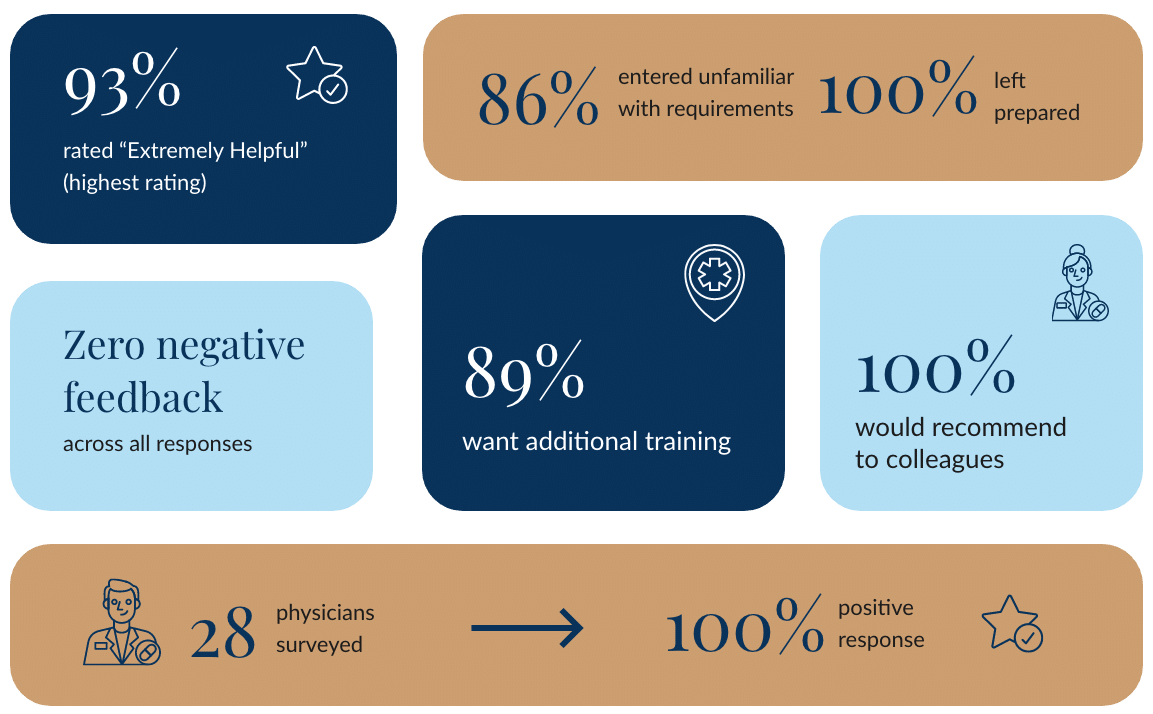
Key Metrics for Leadership Review:
The Numbers Tell
Only Half the Story
Before our workshop:
- 86% of physicians were “not familiar” with CMS disclosure requirements
- 0% felt fully prepared for these conversations
- Most had never received formal training in error disclosure
After just one session:
- 100% felt more prepared to navigate these conversations
- 93% rated the training “Extremely Helpful”
- 100% would recommend it to colleagues
- 89% wanted MORE training
The Moment That Changes Everything: Seeing Yourself
“Seeing yourself after, and receiving helpful feedback. Makes a world of difference on how to be more empathetic to others.”
“Actual breakdown of your verbal and nonverbal skills. Shows how you can improve.”
“One physician admitted what many were thinking: ”I thought it was most helpful to know where my deficits in communication are so that I know where to improve.”
Beyond Theory: Practical Tools That Work
- “Being given language and phrases to use in the event of a medical error”
- “The recommendations on wording when communicating with families”
- “Tips for improving connection with family/friends of patient”
- “Post-interview session with clear examples on areas of improvement”
Every comment pointed to the same truth: physicians desperately need practical, specific guidance for these conversations—not generic communication theory.
“Was an Absolute Amazing Learning Opportunity”
That’s how one physician described the experience. Others echoed similar sentiments:

Why Only Dr. Orsini and The Orsini Way Could Create This Training
Here’s what traditional consultants don’t understand: Teaching disclosure isn’t about communication techniques. It’s about understanding the crushing weight of medical responsibility. Only someone who’s lived it knows:
The Physical Reality
I know how your mouth goes dry when you realize your mistake harmed someone. How your hands shake holding the chart. How time slows down as you walk to that family’s room. Communication consultants read about these moments. I’ve lived them for 30 years.
The Medical Culture Barrier
Medical training teaches us to project confidence, never show weakness, always have answers. That training becomes our enemy in disclosure conversations. Only a physician understands how to reprogram those instincts while maintaining professional composure.
The Unspoken Fears
Every physician walking into disclosure thinks: “Will I be sued? Will I lose my license? Will my partners lose respect for me?” Non-physicians teach you to ignore these fears. I teach you to channel them into connection, because I’ve felt them too.
The Language That Works
There’s a vocabulary that builds trust versus triggers litigation. Phrases that preserve dignity while accepting responsibility. Words that heal instead of harm. I learned this language through thousands of bedside conversations, not textbooks.
Why Video Review Matters
Physicians are trained observers—but never of themselves. When you see your body language contradicting your words, your defensive posture, your rushed pace—that’s when transformation happens. I knew physicians needed to see themselves because I was shocked when I first saw myself.
The Peer-to-Peer Dynamic
As one participant noted about our review: it’s “physician-to-physician coaching from someone who’s been there.” You can’t fake that authenticity. You can’t train actors to understand the weight of medical responsibility.
Inquire About Q1 2026 Workshop Availability
The Physicians Have Spoken
100% want their colleagues to have this training. The question isn’t whether your physicians need this—it’s whether they’ll get it before or after they need it.